The Ultimate Guide to Bracket Busters: Everything You Need to Conquer March Madness Hype
- creativexings
- 23 minutes ago
- 8 min read
March Madness hype hits the same every year: group chats go feral, brackets become personality tests, and somebody’s “safe” 1-seed gets cooked before the weekend’s over. If you want to win pools (or at least not be out by Saturday lunch), you need to understand bracket busters, the mid-major teams and matchups that blow up chalk and turn “expert picks” into confetti.
This guide is a deep dive into how bracket busters actually happen, what traits show up again and again, and how to spot the mid-major teams that can steal games (and steal your friends’ money).
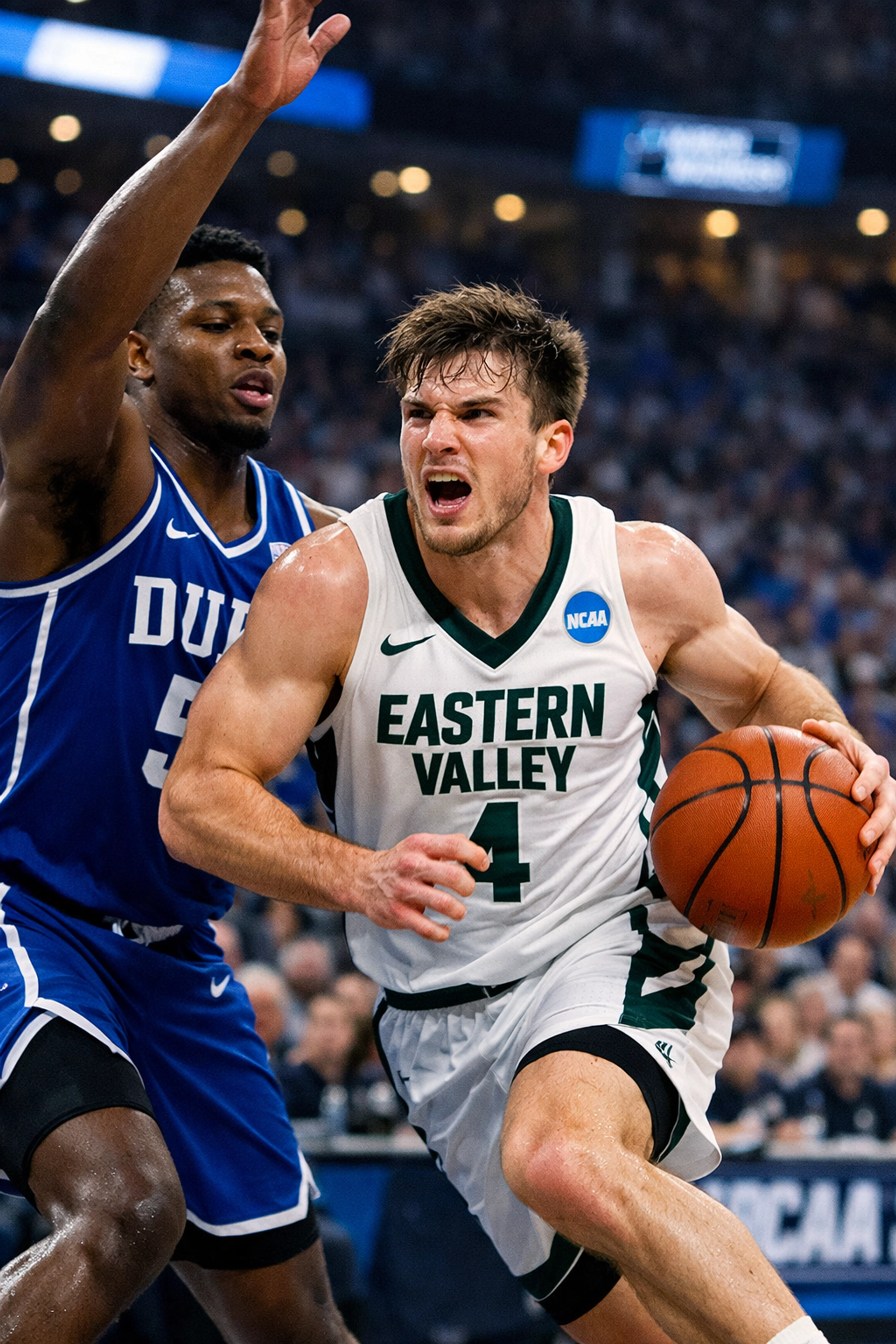
First: what “Bracket Buster” really means (and why the hype is justified)
A bracket buster isn’t just “an upset.” It’s an upset that breaks the way most people fill out brackets.
Most casual brackets are chalk-heavy:
higher seed advances
brand-name programs get the benefit of the doubt
“I’ve heard of them” becomes analysis
The tournament format is built to punish that mindset. March Madness is:
68 teams
single elimination (one bad shooting night = go home)
seeding that isn’t always talent-ranked (it’s résumé + committee context)
So when a mid-major (or any lower seed) has a very specific edge, turnovers, shooting variance, pace control, veteran guards, it creates the exact chaos the tournament is famous for.
The March Madness structure that creates upset fuel
You don’t need to memorize the entire bracket, but you do need to understand why upsets cluster early.
Key points:
The field is split into four regions.
Seeds run 1 through 16 per region.
The “First Four” play-in games feed into the Round of 64.
Every round is survival: Round of 64 → Round of 32 → Sweet 16 → Elite 8 → Final Four → Title
Why early-round bracket busters hit hardest:
Higher seeds have less time to adjust to weird styles.
Mid-majors often run systems that big conference teams don’t see much.
One hot shooting game can erase a talent gap fast.
Mid-major doesn’t mean “small”, it means “mispriced”
Here’s the key: when people say “mid-major bracket buster,” they often mean undervalued, not “worse.”
Mid-major teams can be under-seeded because:
fewer “Quad 1” wins (less opportunity, not always less ability)
conference perception bias
slow tempo makes wins look less impressive
they lost close games early and caught fire late
the committee values résumé shape over matchup quality
That last part is where you win. Bracket busters live in matchup edges, not vibes.
The 7 traits that scream “bracket buster” (mid-major edition)
Use this as your checklist when you’re scanning 10–15 seeds for live dogs.
1) Turnover edge: they force chaos but don’t gift it back
Upsets happen when a favorite can’t get comfortable. The quickest way to do that is turnovers.
Look for teams that:
force a high turnover rate (especially with pressure and active hands)
protect the ball (low turnover offense)
have multiple ball-handlers (not just one point guard)
If a team can create extra possessions without giving them away, they can beat anybody for 40 minutes.
2) Experienced guards (the “late-game tax” on favorites)
In March, the ball finds guards. A mid-major with two veteran guards who can:
hit free throws
create late-clock shots
stay calm vs. pressure …is a nightmare for a young, athletic favorite that hasn’t been in that exact moment.
When the game is tight at 4:00, experience becomes a real stat.
3) They can actually shoot (and they’re willing to)
Three-point variance is the great equalizer. Some teams can shoot; others are just hoping.
Bracket busters usually have:
multiple rotation players who can hit threes
quick-trigger confidence (they don’t hesitate)
good shot quality (catch-and-shoot, inside-out looks)
Translation: they can erase a 10-point gap in two possessions.
4) They control tempo (slow teams can drag you into a street fight)
Fast favorites love rhythm. Mid-majors that slow the game down:
shorten possessions
limit transition
reduce total trips up and down the floor
Lower possession count = fewer chances for the better team to separate.
This is why “boring” teams upset “fun” teams.
5) They defend without fouling
Free throws kill underdogs. If a mid-major can guard without putting a favorite at the line every trip, they stay alive longer, especially against teams that rely on bully-ball drives.
Look for:
disciplined rotations
strong defensive rebounding
opponents struggling to get easy rim attempts
6) One elite skill that travels (even on a neutral floor)
Bracket busters often have a “superpower,” like:
offensive rebounding dominance
elite rim protection
a star scorer who draws doubles
a weird zone that forces bad threes
One elite trait can control a game. It doesn’t need to be pretty, it needs to be repeatable.
7) They’re trending up at the right time
Form matters. Conference tournament momentum matters. Health matters.
A lower seed that’s:
healthy now (even if they weren’t in January)
playing their best ball in March
just won three games in three days …is not the same team that took two bad losses in November.
How to identify “real” bracket busters vs. trendy traps
Some underdogs get picked by everyone, and that’s where you can get burned. You’re not just hunting upsets, you’re hunting correctly-priced upsets.
Use these filters.
Filter A: Is Vegas hinting the seed is wrong?
One of the simplest tells: if the lower seed is a short underdog (or even favored), it usually means:
the committee seed line doesn’t match power rating reality
matchup favors the “underdog”
public perception hasn’t caught up
You don’t need to bet, just use the spread as a reality check.
Filter B: Does the underdog have a path to score when things get tight?
Upsets die when the underdog goes 4 minutes without points. Ask:
do they have a go-to action?
can they get to the line?
can they create a decent shot late?
If their offense relies on perfect ball movement only, a physical favorite can blow it up.
Filter C: Are they built to survive a bad 3-point night?
If the mid-major is “all threes,” one cold stretch ends it. The better upset teams can still score:
at the rim
off offensive boards
at the free-throw line
via midrange pull-ups (yes, it matters in March)
The upset zones: where bracket busters live most often
You’ve heard it for years, but here’s the practical way to use it.
12 vs 5: the classic for a reason
This matchup often features:
a mid-major champion that’s actually strong
a 5-seed that’s inconsistent (great highs, shaky lows)
a style clash the favorite hasn’t prepared for
Actionable move: pick a 12 when they have guard experience + shooting + low turnovers.
11 vs 6: where “underseeded” teams hide
Sometimes an 11 is:
a major conference team with a rough record but strong metrics or
a mid-major with a legit profile that got disrespected
Actionable move: pick an 11 when they can win the free throw battle and defend the arc.
10 vs 7: the “quiet chaos” matchup
This is less “Cinderella,” more “these teams are basically equal.” Don’t overthink it.
Actionable move: pick the 10 if they rebound better and have the best guard on the floor.
13 vs 4: the high-upside swing
This is the “I’m trying to win the pool” spot. A 13 can absolutely win, but you need real reasons:
elite shooting team vs. a 4 that allows threes
mismatch in pace
4-seed turnover issues
13-seed star who can get 25
Actionable move: pick one 13 over 4 if the matchup is clean. Don’t spam it.
A simple “Bracket Buster Score” you can use in 3 minutes
When you’re filling out your bracket fast, give each underdog a quick score from 0–2 in each category:
Ball security (low turnovers)
Turnover creation (pressure/steals)
Guard experience (upperclass ball-handlers)
3-point volume + efficiency
Free-throw shooting
Rebounding edge (especially offensive boards)
Tempo control (can they dictate pace?)
10+ points: real upset candidate 7–9 points: matchup-dependent 0–6 points: trendy trap more often than not
This is not meant to be perfect. It’s meant to keep you from making emotional picks.
Conquering March Madness hype: how to build a bracket that doesn’t die on Day 1
People lose pools by either:
picking all chalk (too common to win), or
picking chaos everywhere (you’re dead by Round of 32)
Here’s the balance that works.
Keep your “foundation” chalky
Take most 1s and 2s into the Sweet 16.
Don’t get cute with a team that can’t score.
Pick a champion you can defend logically (not just “I like them”).
Spend your upsets where the math and matchups like them
Target 10/7 and 11/6 for smart separation.
Pick 12/5 where the underdog protects the ball and can shoot.
Take one well-researched 13/4 swing if you need to differentiate.
Use a “story” for each upset pick
If you can’t explain it in one sentence, don’t pick it.
Good one-sentence reasons:
“They’ll win the turnover battle and hit threes.”
“They slow the pace and force bad shots.”
“They have the best guard and they don’t foul.”
Bad reasons:
“They’re due.”
“This seed always upsets.”
“Cool mascot.”
Make it fun: high-energy graphics that actually help (not just noise)
If you’re sharing picks on socials or running a watch party, visuals matter. High-energy graphics also keep your audience locked in, especially if you’re creating content around mid-majors that casual fans don’t know.
Best graphic ideas for bracket buster content:
“Upset Radar” heat map by seed line (10–13 highlighted)
“Turnover Trouble” graphic: favorite’s turnover rate vs. underdog’s pressure
“Guard Play Wins” comparison card (minutes, FT%, assist-to-turnover)
“3-Point Variance” shot profile wheel (how each team scores)
Quick checklist: before you lock your bracket
Run through this like a final inspection:
Did I pick at least 2–4 first-round upsets that I can explain?
Did I avoid stacking too many double-digit seeds in the Sweet 16?
Did I pick at least one unpopular but logical upset (differentiation)?
Did I check if any “underdog” is a tiny spread (seed might be off)?
Did I avoid picking against elite defense just because it’s boring?
If yes, your bracket is built to survive the chaos: not get embarrassed by it.
Hood Report note: we’re built for moments like this
March Madness hype moves fast, and the best edge is staying organized: matchups, trends, guard play, and the few stats that actually translate to neutral-floor tournament games. That’s the lane we live in at Hood Report: clear analysis, no fluff, and content that’s easy to use when the games start flying.
If you want to connect with the team or collaborate on March Madness content, hit our contact page: https://plconsultingllc.com/contact
Social promo handoff for Sonny (LinkedIn, X, Instagram, Facebook)
LinkedIn Title: Bracket Busters 101: How Mid-Majors Blow Up March Madness Brackets Post: March Madness hype is fun until your “safe” picks get clipped on Day 1. I dropped a full guide on how bracket busters actually happen: what to look for in mid-majors, which seed lines are most volatile, and a quick scoring checklist you can use in minutes. Read: https://plconsultingllc.com/blog
Twitter/X Bracket busters aren’t random. They’re usually: guard experience + turnover edge + real shooting + tempo control. Full guide to mid-major chaos + a quick “Bracket Buster Score” checklist: https://plconsultingllc.com/blog
Instagram Caption: March Madness hype is real… and so are bracket busters. If you’re hunting mid-major upset picks, use this checklist:
turnover edge
veteran guards
shooting that travels
tempo control Full guide in the blog. Link in bio (or visit): https://plconsultingllc.com/blog
Facebook If you want to survive March Madness hype, you need to pick smarter upsets: not more upsets. I put together a complete Bracket Busters guide focused on the mid-major traits that actually translate in the tournament (guard play, turnovers, shooting, tempo). Read here: https://plconsultingllc.com/blog
Comments